When your body gets hurt, it sends out a protein called Galectin-3 — Gal-3 for short.
In the right place at the right time, Gal-3 helps.
When injury keeps happening, it becomes a problem.
Gal-3 is like a master switch for inflammation. It sits inside cells, on their surface, and in the space between them. Depending on where it is, it changes what it does.
After repeated injury, Gal-3 doesn’t just clean up the damage. It keeps the immune system turned on. That is how a short-term repair job becomes long-term inflammation, scarring, and organ damage.
Here’s how it works in plain language:
It sounds the alarm too loudly.
Gal-3 tells the body “danger is still here.” That flips on a system called the inflammasome. The result is a flood of inflammatory signals — the same ones that cause swelling, pain, and tissue breakdown.
It calls in more immune cells.
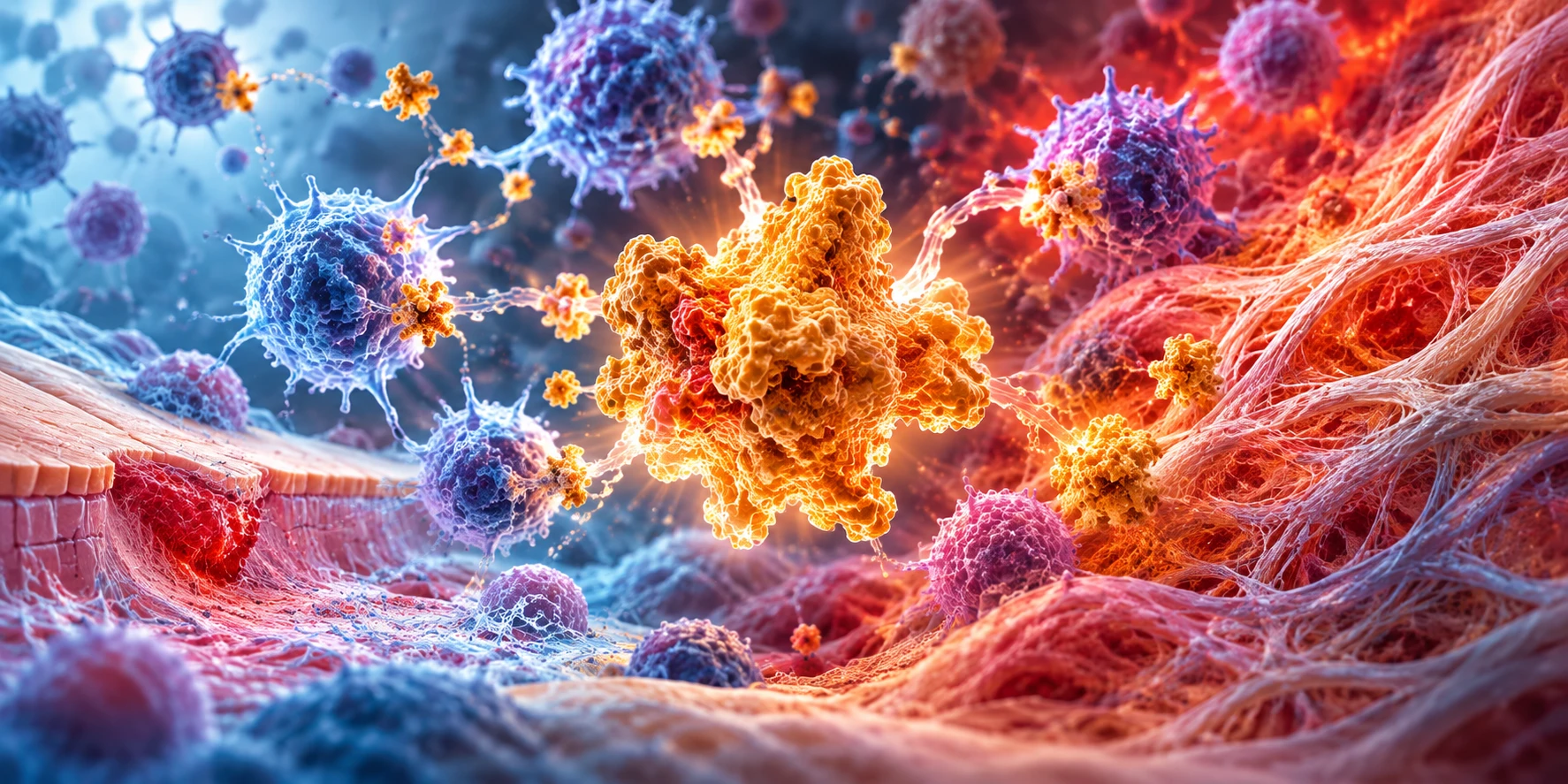
Gal-3 acts like a homing beacon. It pulls in extra white blood cells and turns macrophages into an aggressive state. In blood vessels it makes the lining stickier, so plaques can grow and become unstable.
It turns repair into scar tissue.
When the alarm never shuts off, Gal-3 tells fibroblasts to keep laying down extra matrix. Soft tissue becomes stiff. Organs slowly lose function. That’s the path from inflammation to fibrosis.
That’s why researchers now call Gal-3 a bridge between injury, chronic inflammation, and fibrotic disease.
Simple idea:
Gal-3 is meant to help you heal.
When it stays elevated, it can lock the body into a cycle of inflammation and scarring instead.