

Your body’s ability to maintain health depends on precise communication between cells. When this communication becomes disrupted, it can contribute to chronic low-grade inflammation and reduced resilience.
This page explains the background science, the hydration-shell technology, and AquaLink’s proposed mechanisms, and keeps the three clearly separate.
Foundation
Cellular communication · Hydration shell
Proposed mechanism
Four steps · Three mechanisms
Galectin-3
Lattice · Inflammation · Fibrosis · Independent research
Relevance
What this means for AquaLink
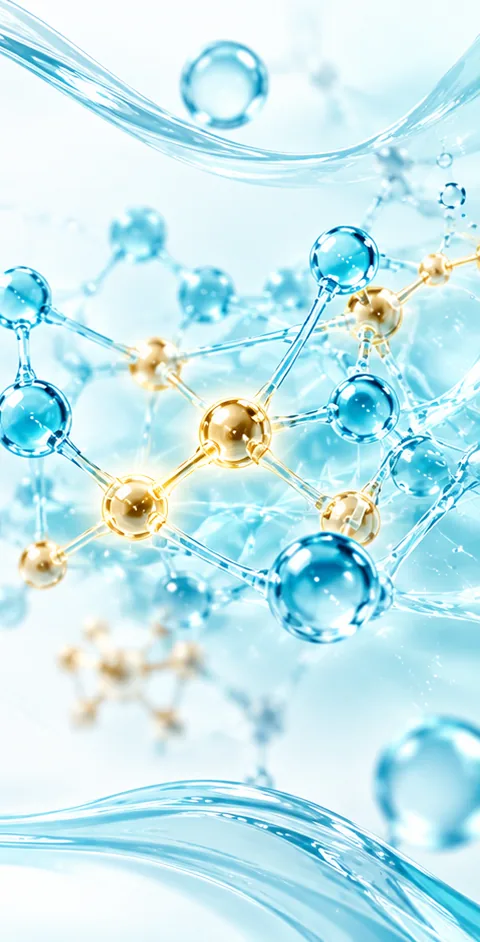
Galectin-3 is a β-galactoside-binding protein that plays a central role in inflammation, immune signaling, and tissue fibrosis. It acts as a molecular organizer on cell surfaces and as an amplifier of inflammatory and fibrotic pathways when dysregulated.
The Galectin-3 lattice acts like temporary scaffolding on the cell surface. It holds certain receptors in place, slows their removal, and organizes them so signaling becomes stronger or lasts longer.
Background science. This describes how Galectin-3 behaves in the body; it is not a description of what AquaLink does.
Understanding Galectin-3 helps explain why certain polysaccharides (such as arabinogalactan in AquaLink) are of interest for supporting balanced cellular communication and a healthy inflammatory response.
AquaLink is a functional beverage powered by a patented, thermally reversible hydrogen-bonded hydration shell formed in electrolyzed alkaline water around functional polysaccharides.
This technology helps protect these polysaccharides during digestion and supports their delivery, contributing to clearer cellular signaling and a more balanced inflammatory response.

Electrolyzed alkaline water, in which the hydration shell forms.
A thermally reversible, hydrogen-bonded structure formed around the polysaccharides.
Including arabinogalactan, which the shell helps protect during digestion and supports in delivery.
Four key steps:
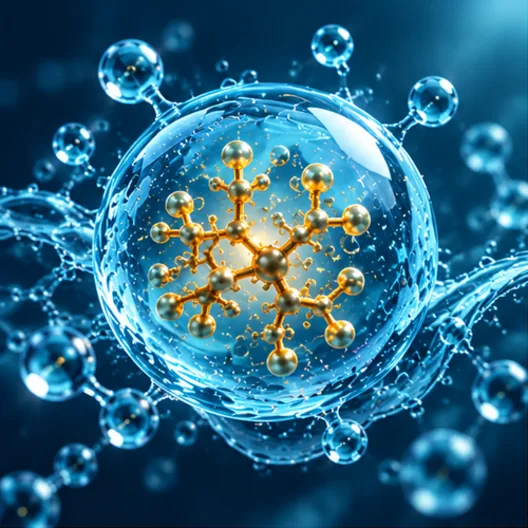
Protects key polysaccharides through the digestive tract
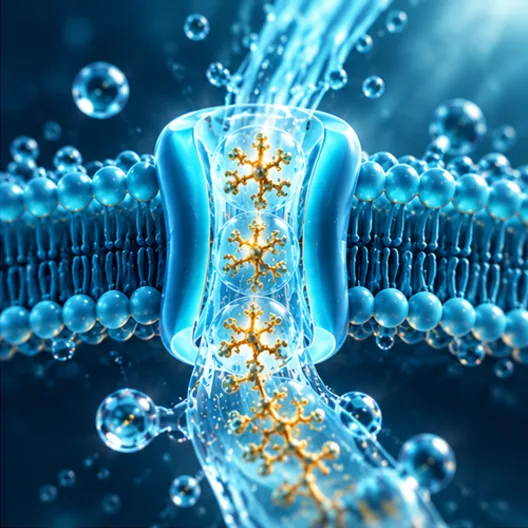
Enhances cellular uptake via aquaporin water channels
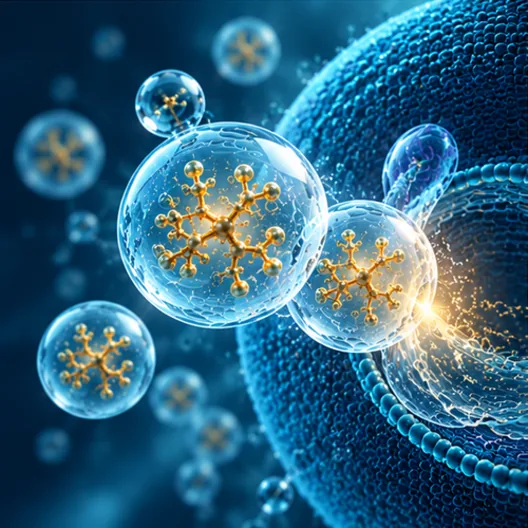
Delivers polysaccharides where they can interact with the glycan lattice
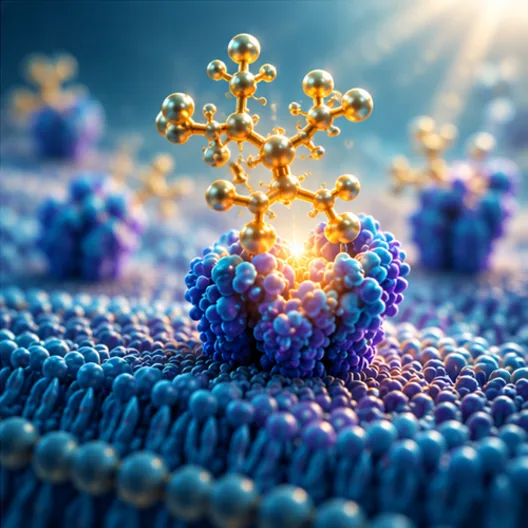
Supports healthy glycan lattice organization and galectin receptor activity
AquaLink’s technology is designed to support healthier cellular signaling through three interconnected mechanisms:
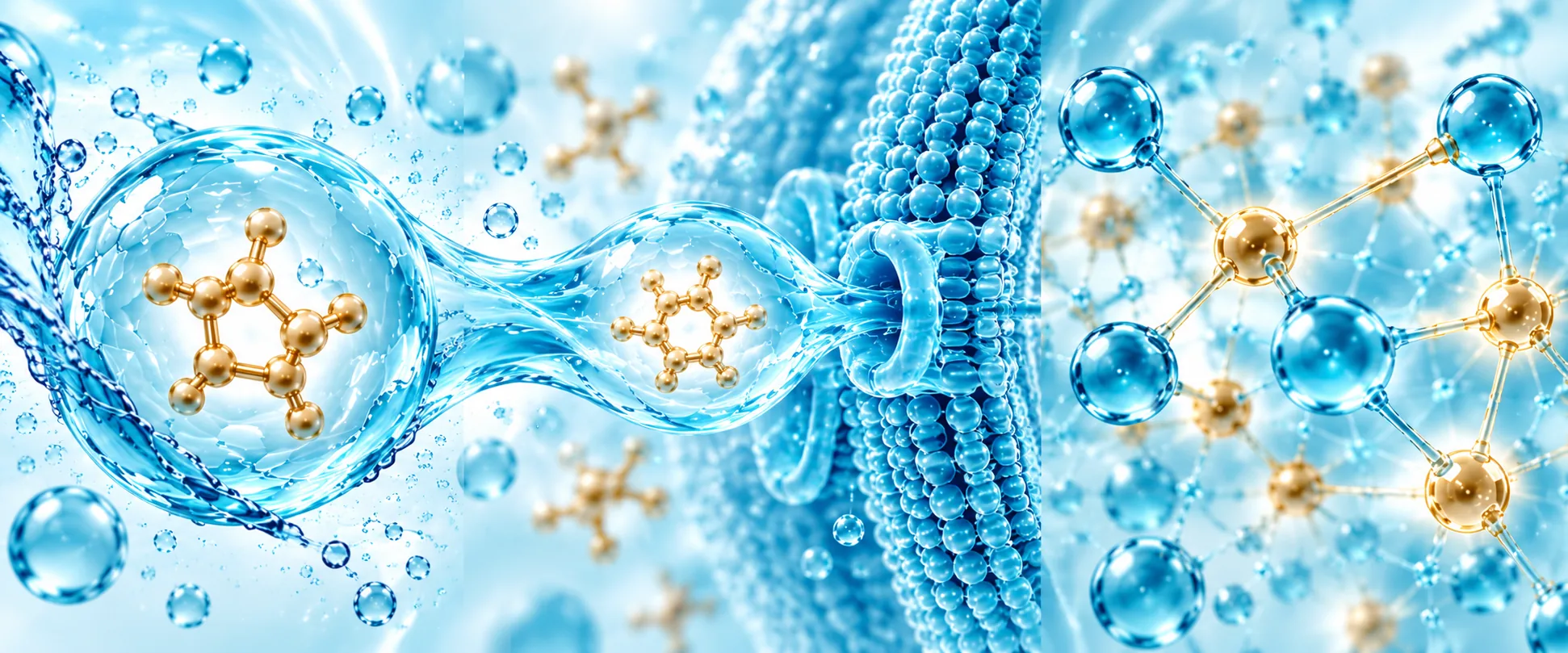
The hydration shell creates a protective barrier around the polysaccharides.
Structured water with reduced surface tension supports more efficient movement through aquaporin channels.
The branched polysaccharides help support healthier galectin receptor activity.
Galectin-3 forms dynamic lattices on the surface of cells that control how certain receptors send signals.
Galectin-3 binds to sugar structures (glycans) on cell-surface proteins.
Through its N-terminal domain it oligomerizes (often forming pentamers or larger structures).
These oligomers cross-link multiple glycoproteins, creating a lattice-like network on the membrane.
Receptors stay on the surface longer and continue signaling.
Brings certain receptors closer together or keeps them apart.
Especially TGF-β receptors and integrins.
Can limit excessive T-cell receptor clustering.
By keeping pro-inflammatory and pro-fibrotic receptors active longer.
Galectin-3 contributes to both the initiation and the persistence of inflammation.
Key point: in acute injury Galectin-3 helps the body respond. When inflammation becomes chronic, elevated Galectin-3 sustains the response and drives tissue remodeling.
Galectin-3 is a major driver of tissue fibrosis (scarring). It sits at the crossroads of chronic inflammation and excessive extracellular matrix production.
Required for fibroblasts to become matrix-secreting myofibroblasts.
Helps activate TGF-β1 and stabilizes its receptors.
Promotes a pro-fibrotic macrophage phenotype.
Pushes unresolved inflammation toward scarring.
Stimulates collagen and extracellular matrix production.
Galectin-3 drives fibrosis in liver, lung, heart, and kidney. Reducing its activity significantly limits scarring in experimental models.
Independent research
Galectin-3 has become the subject of growing clinical interest. The overview below is written by a practising physician and is summarised here so you can read the underlying discussion in full, at the source.
Source
Dr. Jill C. Carnahan
MD, ABIHM, IFMCP
Published 17 February 2026
jillcarnahan.com
READ THE FULL ARTICLEThis is an independent article by Dr. Jill C. Carnahan. It is not affiliated with, commissioned by, or about AquaLink. It does not mention AquaLink, arabinogalactan or hydration-shell technology, and nothing in it describes what AquaLink does. It is provided as background reading on Galectin-3 only.
Carnahan describes Galectin-3 as a beta-galactoside-binding lectin found throughout the body, where it binds to sugar molecules on cell surfaces. She writes that it is protective under normal conditions, but that chronic elevation turns it into a driver of disease rather than a defence against it.
The article connects sustained Galectin-3 activity to pro-inflammatory signalling, and to fibrosis, describing how it can activate fibroblasts to produce excess collagen and scar tissue across cardiac, liver, kidney and lung tissue.
Her central argument is that Galectin-3 is both measurable and modifiable. She argues it is among the most important biomarkers not routinely measured, and reviews the dietary, nutritional and lifestyle research around it.
What the article covers
What Galectin-3 is, and how it behaves on the cell surface
Its role in inflammatory signalling
Fibrosis in cardiac, liver, kidney and lung tissue
Blood testing, and who she suggests testing
Diet, nutrition, exercise, sleep and stress research
Arabinogalactan, a key polysaccharide in AquaLink, contains galactose structures that can bind to the carbohydrate-recognition domain of Galectin-3.
By interacting with these binding sites (particularly in the gut), arabinogalactan may help modulate lattice formation and related inflammatory signaling. The hydration shell technology is designed to protect and support delivery of these polysaccharides.
Important distinction
AquaLink supports a healthy inflammatory response and cellular communication. It is not a treatment for any disease.
Learn more about AquaLink’s science and how it is designed to support hydration and healthy cellular function.